Saudi Arabia’s construction pipeline remains extremely large, even as mega-developments are being reprioritised. JLL cited $1.5 trillion in unawarded projects as of the start of 2024, and AGBI reported a growing consensus that recalibration is not only necessary but potentially beneficial if it results in “more realistic versions” of projects. For contractors and suppliers, the near-term signal is that awards can still rise even when hiring slows. The Saudi Contractors Authority recorded SAR111 billion ($30 billion) in construction contracts between January and July 2026, up almost 60% year on year, while MEED Projects data cited by AGBI said awards more than quadrupled year on year in June.
That mix—bigger award numbers paired with more cautious staffing—helps explain what many firms should plan for as they model a Saudi construction market outlook for 2027. AGBI reported the industry moved from increasing headcount by about a third year on year in 2024 and 2025 to single-digit growth “today,” with businesses seeking certainty before adding people. Saudi Contractors Authority data cited by AGBI shows workers registered under construction activity reached 365,562 in Q1 2026, up 6% from 345,005 logged for 2025. The implication is a market that still awards work, but increasingly expects tighter delivery plans, fewer speculative mobilisations, and clearer funding and procurement routes.
Where the 2027 Opportunity Is Concentrating
Several indicators in the sources point to opportunity concentrating in implementable packages, industrialised delivery, and energy and grid-enabling scope. MEED estimates cited by Jawlah put the total value of awarded and expected giga-project contracts at about $330 billion through end-2026, including nearly $130 billion in projects granted final approval by end-2025 and about $200 billion in expected new contracts. Mordor Intelligence notes that Saudi Electricity Company committed USD 126 billion through 2030 for 380-kilovolt substations and 12,000 kilometers of high-voltage lines, and that ACWA Power’s NREP Round 7 awards in 2025 added 5.3 GW of solar and wind with commercial operations slated for 2028. These figures frame a runway of work where EPC, civil, and installation scopes can be sequenced and procured in ways that are easier to deliver than highly speculative builds.
The reset is also sharpening how bids are priced and how risks are shared. Mordor Intelligence reports steel rebar rose 15–20% in 2024 and cement increased 8%, while SAIBOR averaged 5.2% in 2025, increasing interest expense for leveraged developers. It also notes fixed-price contracts signed before inflation left mid-tier builders earning 4–6% EBITDA in 2025, down from 8–10% two years earlier. In response, Red Sea Global inserted index-linked escalation clauses in 2025 awards that reimburse 70% of material hikes above a 5% band. For 2027, these details signal that the best opportunities may be in contracts that reflect current pricing reality and provide workable escalation mechanisms.
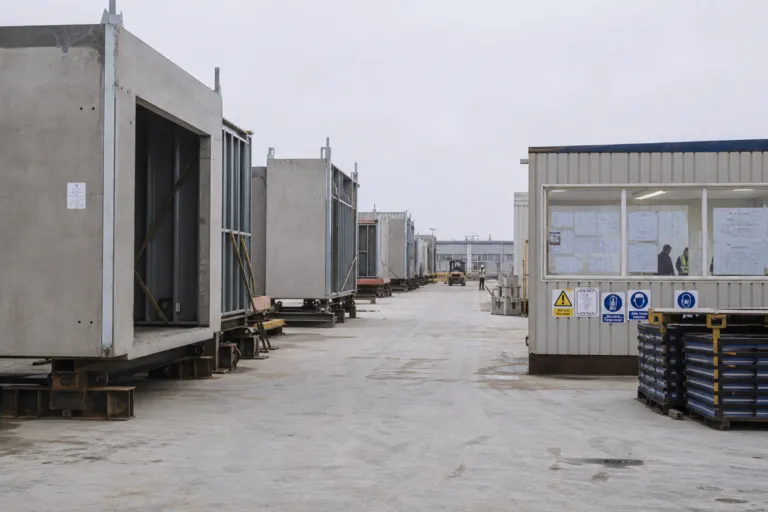
Finally, capability requirements are tightening around labor nationalisation and modern delivery methods. Mordor Intelligence states that Saudization rules raise the local labor quota to 30% by 2027 and that contractors are investing in training academies that certify 500 workers annually in critical skills. It also describes NEOM-related modular supply, noting Nesma’s venture with Austria’s Strabag will supply 10,000 modular housing units to NEOM by 2027, and it highlights digital workflows, including a ROSHN requirement for BIM-to-fabrication integration that cuts rework by 15%. Together, these factors suggest 2027 awards will increasingly favor bidders that can prove local workforce plans, DfMA supply chains, and strong digital engineering controls.
What does the giga-project recalibration change for 2027 bidding?
What do recent contract-award figures suggest about momentum going into 2027?
How should companies frame a Saudi construction market outlook for 2027 using the sources?
Which procurement and commercial terms matter most after recent cost inflation?
What capability signals could shape who wins packages by 2027?
Talk to us for your needs in:
-
Economic & Social Impact Assessment
-
Environmental Impact Assessment & ESG
-
Market Entry Strategy
-
Business Model Transformation
-
Project Management Office (PMO)
-
Site Selection Advisory
-
Risk Assessment
-
Operational Excellence
-
Supply Chain Analysis
-
Feasibility Study
-
Growth Strategy
-
Mergers & Acquisitions (M&A)