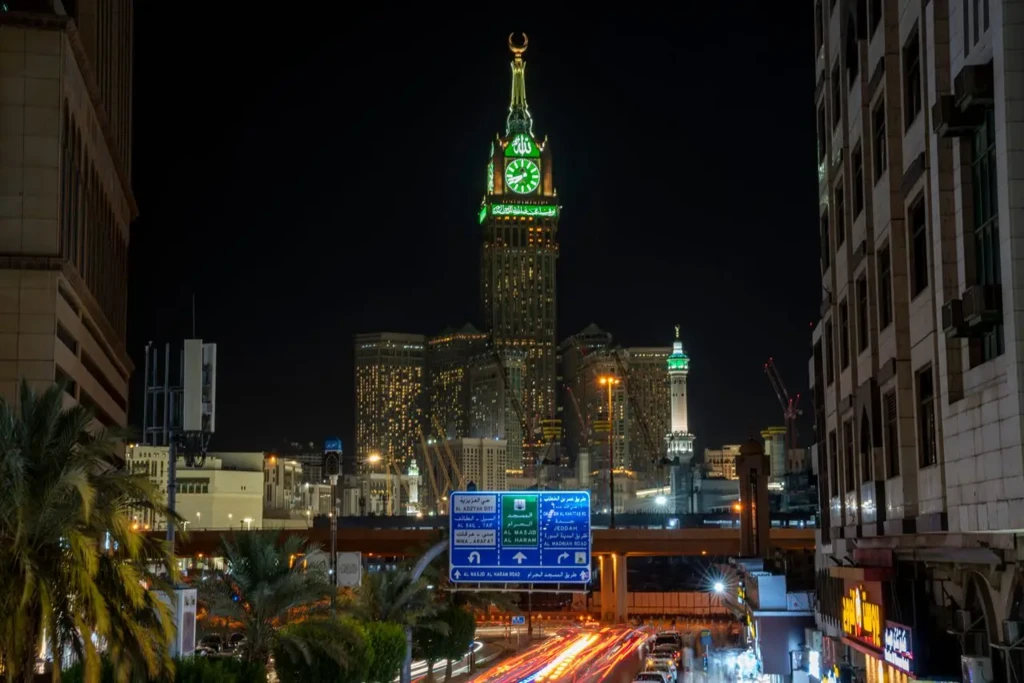
Riyadh is in a phase where infrastructure is reshaping how commercial real estate (CRE) value is defined and underwritten. At JLL client events highlighted in regional reporting, transit-oriented development (TOD) is positioned as one of the key emerging trends alongside office, residential, retail, hospitality, and newer sectors. In this backdrop, Saudi Arabia’s construction market was described as projected to reach approximately USD 100bn in 2025, with an anticipated annual growth rate of 5.4% through 2029. For CRE strategy, that matters because new transport links, regulatory shifts, and delivery pipelines change which sites can credibly support higher-density, mixed-use formats around mobility hubs.
The Riyadh Metro is repeatedly framed as the anchor that enables those TOD moves. JLL described the metro as a USD 22.5bn investment spanning 176km with six lines and either 84 or 85 stations, depending on the cited summary. Coverage depth was noted at 9.8km per 100 sq km. Separate reporting also described the metro as part of the King Abdulaziz Public Transport Project, with six lines extending 176km and 85 stations, and stated a capacity of up to 3.6 million passengers per day. Together, these figures encourage CRE teams to map demand in walkable catchments and to treat stations as durable nodes for retail, office, and mixed-use absorption rather than as optional amenities.
What Changes in Station-Area Commercial Real Estate Strategy
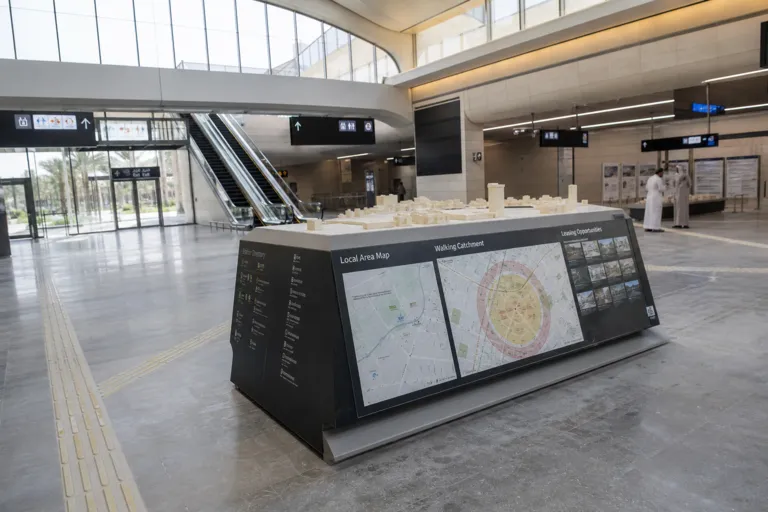
Riyadh transit-oriented development strategy is not only about being “near a station.” Almanazl noted that property outcomes vary by the actual distance to the entrance, walkability, bus connections, services, parking, noise, and property quality. The metro also works with buses: the main bus network was described as 54 routes, 2,145 stations and stops, and a fleet of 679 buses. For CRE planning, this shifts site selection toward places where rail and bus connectivity combine with safe pedestrian access. It also changes leasing logic: assets with strong last-mile conditions can compete for footfall and convenience-driven tenants, while superficially “close” sites may underperform if crossings, sidewalks, or parking management fail.
Pricing expectations are becoming part of the new playbook, but they come with caveats. JLL commentary said properties in proximity to the metro could potentially command a 20% to 30% premium, underscoring why investors are scrutinizing station areas for redevelopment, repositioning, and mixed-use upgrades. At the same time, Almanazl warned that some land or properties may be priced on future expectations rather than real current demand, and recommended evaluating price against actual services, not proximity alone. For CRE strategy, the implication is to pair underwriting assumptions with measurable access quality, tenant demand evidence, and parking and circulation plans that work in practice.
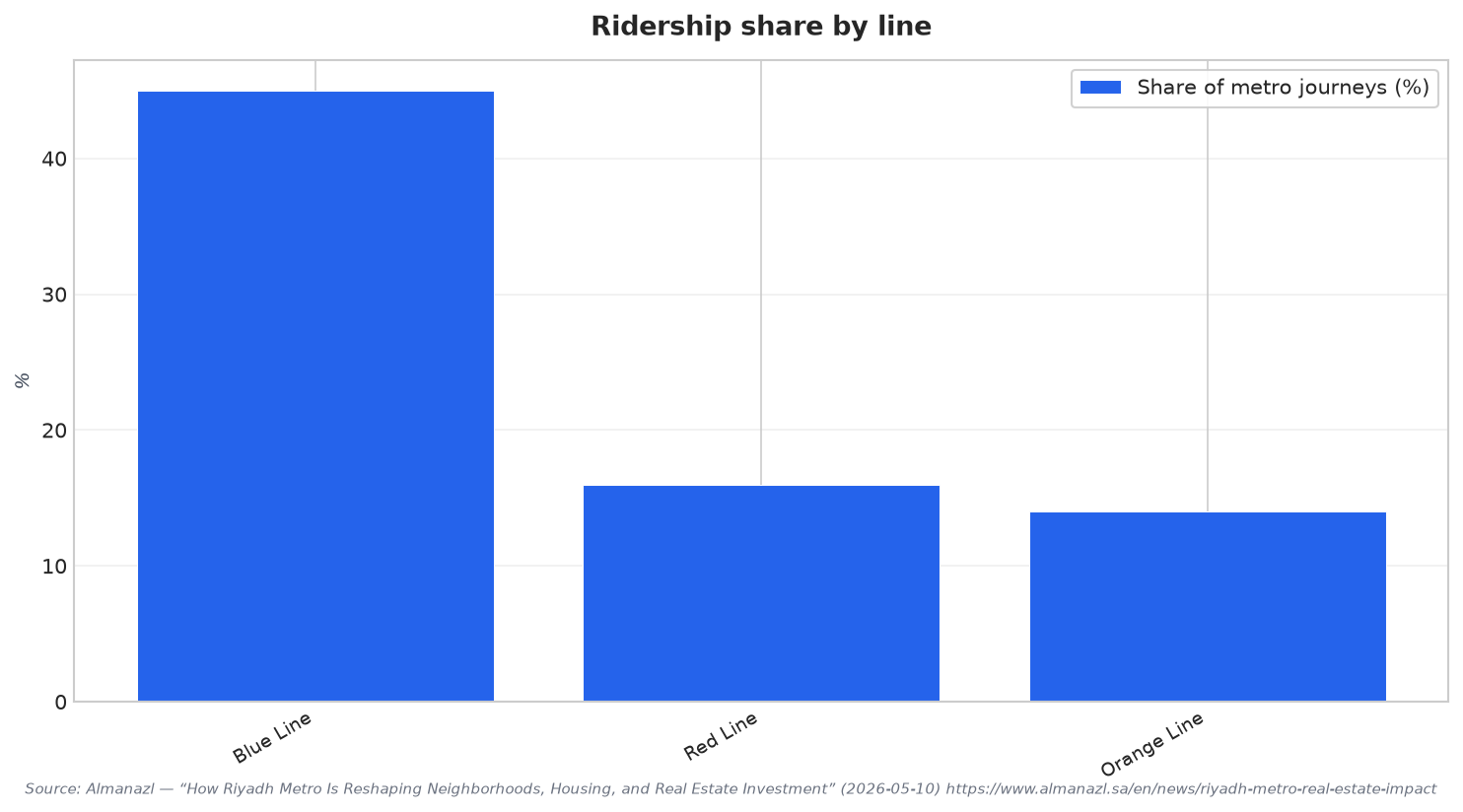
Early operating signals add nuance to where the strongest station-area opportunities may concentrate. Almanazl reported that since metro and bus networks began operating, location assessment has expanded to include accessibility and commute time. It cited a Royal Commission for Riyadh City announcement that cumulative passenger journeys reached 200 million as of March 14, 2026, with the Blue Line at 45% share, followed by the Red Line at 16% and the Orange Line at 14%. It also reported that an extension project for the Red Line was awarded in January 2026, adding 8.4km and five new stations to serve Diriyah Gate and related areas. For CRE leaders, this points to a corridor-based approach: align retail, office, and mixed-use concepts with the lines showing heavier usage, while tracking new stations where future accessibility is being engineered.
What is driving Riyadh’s shift toward transit-oriented development?
How big is the Riyadh Metro network in numbers?
Do properties near Riyadh Metro stations always gain value?
What does ridership data suggest about where commercial demand may cluster?
How are buses part of the station-area real estate equation?
Talk to us for your needs in:
-
Economic & Social Impact Assessment
-
Environmental Impact Assessment & ESG
-
Market Entry Strategy
-
Business Model Transformation
-
Project Management Office (PMO)
-
Site Selection Advisory
-
Risk Assessment
-
Operational Excellence
-
Supply Chain Analysis
-
Feasibility Study
-
Growth Strategy
-
Mergers & Acquisitions (M&A)