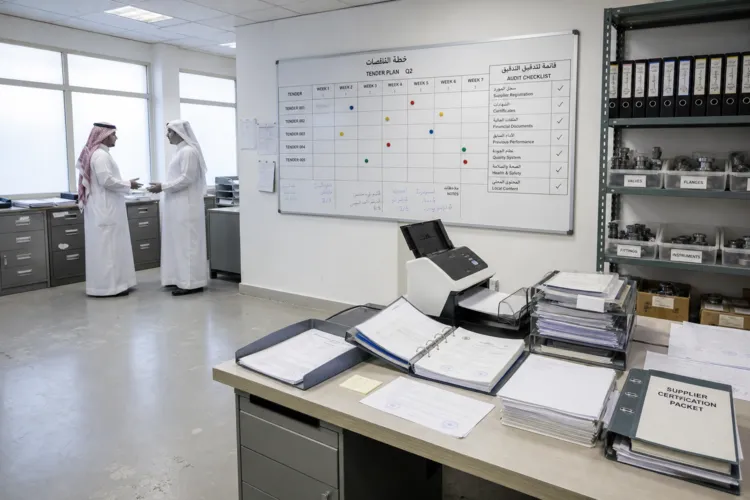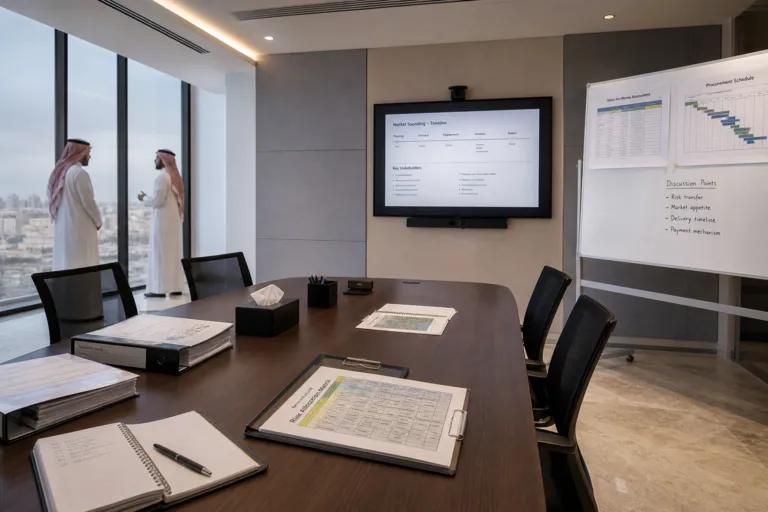
In Saudi Arabia, bankability is a practical test: can the private sector deliver the project under a structure lenders will finance. The National Centre for Privatisation & PPP (NCP) stresses this point and holds structured talks with bidders and lenders before launching transactions, including discussions with commercial and Islamic banks. This early market sounding is designed to ensure that, when a deal is launched, bidders, suppliers, EPC contractors, banks, and export credit agencies are on the same page and are aligning on commercial points rather than reopening legal fundamentals. A typical PPP contract term is 25 years and, in some cases, more than 40 years, which makes “get it right early” a core discipline rather than a preference.
A PPP feasibility study in Saudi Arabia is also shaped by what financing committees expect to see. Feasibility studies are described as a fundamental submission requirement for virtually every development finance institution, and the quality of the analysis influences how lenders assess credibility. The feasibility document is meant to be structured and honest, assessing commercial viability, financial sustainability, and operational soundness. It also has a dual role: it supports the owner’s investment decision while functioning as a primary submission document for institutions reviewing a financing or grant application. For consultants, this pushes feasibility work toward lender-ready outputs, where assumptions, risks, and delivery mechanics can be tested under procurement timelines.
Value-for-Money and Risk Allocation: What “Bankable” Requires
Value-for-money thinking is inseparable from risk allocation. NCP officials and market participants note that risk is often perceived differently by the public and private sectors, and that failure to agree on specific risk points can stop projects from reaching financial close. Saudi regulations now state that the party with the capacity to manage a risk should take it, but the same discussions emphasize that risk carries a cost and cannot be transferred without pricing it. Feasibility-stage planning is where this becomes actionable, with the need for stage gates “right from the beginning until the project is delivered.” In practice, a bankable feasibility approach frames risks, prices their impacts, and aligns them to the party best placed to manage them.
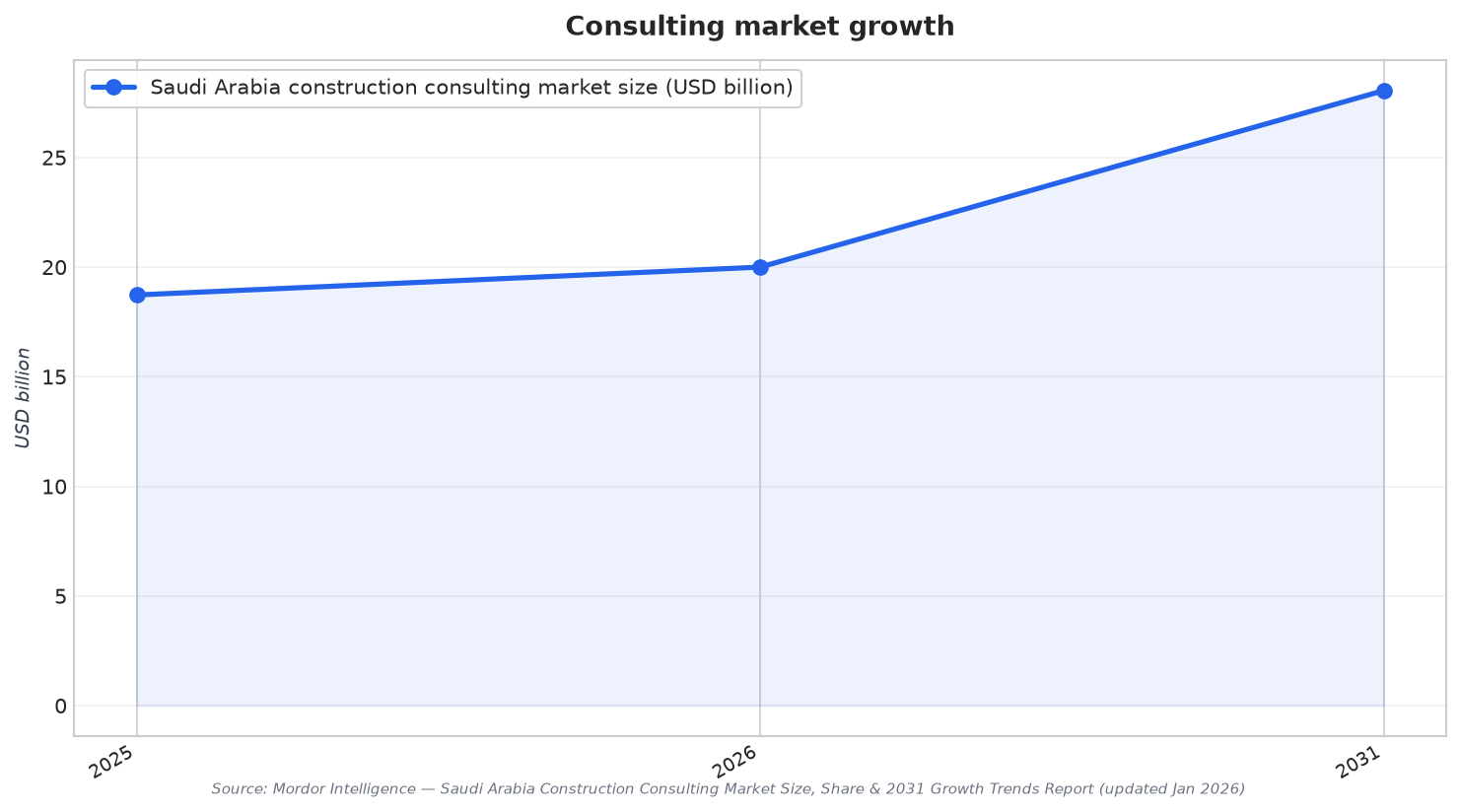
NCP’s project pipeline and the broader advisory market context raise the bar for repeatable, comparable feasibility outputs. One industry source describes a published pipeline of 200 privatisation and PPP opportunities spanning 17 sectors, signaling sustained procurement volume and a shift toward more programmatic, bankability-driven procurement. In parallel, Saudi Arabia’s construction consulting market is projected at USD 20 billion in 2026 and forecast to reach USD 28.05 billion by 2031, with public-sector PPP advisory projected to grow at a CAGR of 8.8% through 2031. These trends matter for feasibility teams because they reward standardised, lender-facing structures that can be reused and stress-tested across sectors, especially where senior debt is anchored by Saudi and regional banks.
To strengthen evidence and reduce challenge risk, feasibility practitioners in Saudi Arabia highlight disciplined data sourcing and early demand mapping. One approach starts market analysis by mapping actual and expected demand over the project’s first three years, alongside Saudi customer behavior and purchasing power in the target city. It also emphasizes relying on trusted official sources such as the General Authority for Statistics, the Ministry of Investment, and the Monshaat platform, complemented by interviews with owners of similar Saudi market projects. For sector-specific bankability, feasibility reporting may also require detailed modeling and compliance checks, such as projecting clinical utilization rates and verifying alignment with Saudi Food and Drug Authority (SFDA) and Ministry of Health (MOH) standards. A PPP feasibility study Saudi Arabia stakeholders will accept is the one that can stand up to this level of scrutiny before procurement begins.
Why does the NCP engage bidders and lenders before launching a PPP transaction?
How long do PPP contracts typically run in Saudi Arabia?
What does Saudi guidance say about who should take a project risk?
What pipeline scale signals the need for more repeatable, lender-ready feasibility work?
What should a PPP feasibility study for Saudi Arabia include to be taken seriously by lenders?
Talk to us for your needs in:
-
Economic & Social Impact Assessment
-
Environmental Impact Assessment & ESG
-
Market Entry Strategy
-
Business Model Transformation
-
Project Management Office (PMO)
-
Site Selection Advisory
-
Risk Assessment
-
Operational Excellence
-
Supply Chain Analysis
-
Feasibility Study
-
Growth Strategy
-
Mergers & Acquisitions (M&A)